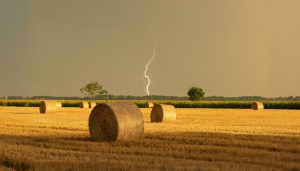
Before the Fire Falls

More Interested in the Prize Than in the Process
Often in my life, I have found myself more interested in the prize than in the process. I think about where I want to reach, what I want God to do, how I want things to turn out, but I do not often stop to think about the path He is taking me through.
In some ways, I used to be happy about that because it meant I was not overthinking every step and was not anxious about every turn. But when I look back now, I can see that the process mattered far more than I realized. I am where I am today, is not because of me but because of God. In His mercy, He kept steering me, even when I was too stubborn to see it.
There were seasons where I held on so tightly to my own thoughts and my own understanding that I simply would not turn. Looking back, I can only laugh and say that at times I was stuborn like a donkey, refusing to move, refusing to listen, refusing to see.
What humbles me even more is remembering how often God used my wife to speak into my life. It was never in some dramatic way but often in simple things and ordinary words. And yet, more often than I would like to admit, I would brush it aside. I would tell her, “You do not understand,” or “You are not going through this, so you would not know.” At the time it felt justified. But slowly, over time, it began to dawn on me that maybe I was not resisting her at all but I was resisting the way God was trying to steer me.
How Long Will You Falter Between Two Opinions?
That is why when I came to 1 Kings 18 again, I saw something I had missed before. I have read this chapter bore and usually, when I think about it, I think about Elijah standing boldly before the prophets of Baal, mocking them, calling down fire, and proving in public who the true God is. That is the part that tends to stay with us. It is dramatic, powerful and unforgettable.
But this time, something quieter caught my attention.

Before the fire fell, Elijah spoke to the people and asked them, “How long will you falter between two opinions? If the Lord is God, follow Him; but if Baal, follow him.” And the part that gripped me was not only the question, but the response. Or rather, the lack of one. The people answered him not a word. The silence of people felt that they were not openly rejecting God but were no longer wholly aligned either. And if I am honest, I know that kind of silence. I know what it is like to not fully turn away from God, but also not fully submit. I know what it is like to live in that in between place where the heart is not openly rebellious, but not fully surrendered either.
He Begins With What Is Broken
And then Elijah begins to prepare the altar.
That is where the whole passage opened up to me in a new way.
He does not begin with the fire. He begins with what is broken. He repairs the altar first. He takes the twelve stones according to the tribes of Israel and rebuilds what had been torn down. He arranges the wood. He places the sacrifice. He digs the trench. Then he pours water, not once, but again and again, until everything is soaked.
As I read that, I felt God quietly showing me that what I usually want is the fire, but where He often begins with is the altar. I want the outcome. I want the answer. I want the visible move of God but He first deals with what has been broken down inside me. He first brings me back to alignment. He first rebuilds what I have neglected. And sometimes, the reason the fire has not yet fallen is not because God is unwilling, but because I am still standing with a broken altar.
Drenched Again in the Word
Even the water began to speak to me differently. Elijah drenched the altar until there was no possibility left for man to explain what would happen next. And I could not help but think about how, in our own lives, once the broken altar is repaired, we have to allow ourselves to be drenched again in the Word of God. Not sprinkled but fully drenched, because it is the Word that washes, corrects, aligns, and prepares us. It is the Word that takes us out of our divided opinions and brings us back into single minded devotion. Its also interesting he takes four waterpots of water for three times adding upto twleve, correlating to the twelve stones to rebuild the altar.
And then, at the time of the evening sacrifice, Elijah calls on God, and the fire falls.
But even there, what struck me was not just that the offering, but the timing of the offering. Why evening? Israel used to offer sacrifices in morning and evenings. Once the alignment is fixed, the fire touched everything. The sacrifice, the wood, the stones, the dust, even the water in the trench, nothing was left untouched. And I found myself thinking that this is exactly what the fire of God does. It does not come to touch one part of our life while leaving the rest untouched. When the Spirit of God truly moves, He consumes deeper than we expect. He reaches the offering, yes, but He also reaches the hidden things, the dry things, the dusty things, the things we thought would remain untouched.
Before the Fire Falls
And then the people finally speak. They fall on their faces and say, “The Lord, He is God; the Lord, He is God.”
I think that is what I long for in my own life too. Not just moments where I admire the fire from a distance, but moments where my whole life is brought back into right alignment with God. Moments where what is broken is repaired, where what is dry is drenched again, where what is divided in me is made whole. Because maybe the greatest miracle in this story is not just that fire fell from heaven, but that a broken altar was restored before it did.
And perhaps that is where I find myself even now. Not asking God only for fire, but asking Him to show me what in me still needs to be repaired. To help me stop living for the prize alone and to pay attention to the process. To let Him rebuild what I have neglected, to drench me again with His Word, and to make me a living sacrifice, holy and acceptable to Him.
Because before the fire falls, something in us must first come back into order.
If this reflection blessed you, walk with me.
Every prayer and every share is deeply appreciated.